

Who Should You Recruit for Customer Interviews in Japan?
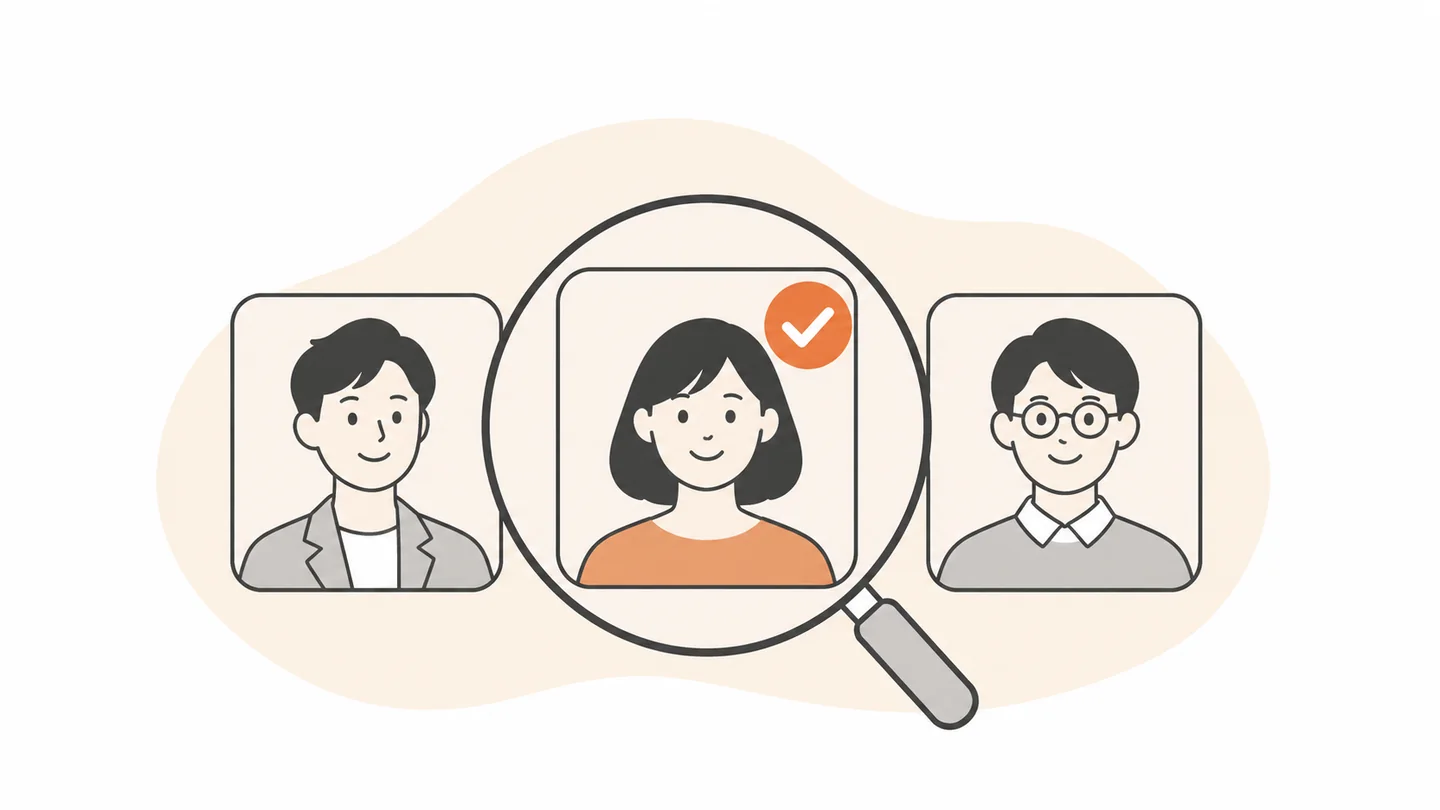
Recruit people who have recently faced the decision you need to understand. For customer interviews in Japan, category experience, buying role and purchase context are usually a stronger starting point than age or residence alone. Put those conditions into a short recruitment screener before booking interviews.
If your team wants to learn why a product might sell, inviting whoever is easiest to reach can give you answers from the wrong audience. The steps below help turn a broad target such as “consumers in Japan” into a practical recruitment brief.
Contents
1. Start with a decision, then define who can explain it
Write down what the interviews will change: the customer segment you prioritise, the problem you address, or the concept you refine. Then ask whose experience would inform that decision.
For example, if you want to understand switching barriers, current users of an alternative matter more than people who simply like your concept. If you want to understand rejection, include people who considered the category but chose not to buy. Keep these groups identifiable during analysis.
Do not use interviews to estimate the size of those groups. They can reveal reasons and questions to test; a different study may be needed to measure how widespread a finding is. See our guide to qualitative versus quantitative research in Japan if that distinction affects your brief.
2. Separate essential conditions from useful variety
An essential condition determines whether someone can answer your research question. Useful variety helps you hear different experiences within that eligible audience. Too many mandatory conditions can make recruitment difficult without improving the decision.
| Recruitment detail | What to specify |
|---|---|
| Relevant behaviour | The category activity or purchase the person must have experienced. |
| Recency | A recall period that fits the purchase cycle, agreed before recruitment. |
| Decision role | Whether you need the user, buyer, approver or a combination. |
| Market context | The Japanese channels, locations or work settings relevant to the decision. |
| Useful variation | Experiences you want to compare, without making every characteristic mandatory. |
Age, income and region can matter when they are linked to your offer. Do not add them automatically. Likewise, a Tokyo-only sample is appropriate for a Tokyo-specific question; it should not quietly become evidence about customers throughout Japan.
3. Screen for behaviour without advertising the desired answer
A screener is a short set of questions used to check whether prospective participants fit the study. Ask for concrete experience before reactions to your proposed product. Avoid an invitation that rewards people for saying they love the idea.
Illustrative example, not a client case: a beverage brand wants to understand how people choose drinks for an evening at home. Its recruitment questions could include:
- Which types of drinks, if any, have you bought for home consumption recently?
- When did you last buy one, and where did you buy it?
- Who usually chooses which drinks your household buys?
- Which occasions did you buy them for?
Agree what “recently” means for this study and use it consistently in the actual screener. Include genuine “none” or “not involved” options. Do not require a preference for the new concept unless that preference is itself the audience you deliberately need to study.
For B2B interviews, replace a vague seniority requirement with a question about involvement in a recent purchase or evaluation. A senior title does not by itself show that someone understands the workflow or approval process you are investigating.
4. Check language and recruitment channels
If the intended customers normally evaluate the category in Japanese, plan a Japanese-language screener, materials and interview. Restricting recruitment to English speakers changes who is eligible. That may suit a specific audience, but it should be an explicit choice.
Ask a Japanese-speaking researcher to check category terms, channel names and answer options. Translate the research intent, then review what each question will actually mean to a participant.
Also record how participants will be found: a panel, customer list, specialist recruiter or another source. Each has coverage limits. GOV.UK’s participant recruitment guidance explains how research activities, scheduling, location and recruitment approach can affect who takes part. It is general methodological guidance, not evidence about Japanese consumers.
5. Approve the screener before recruitment starts
Review both eligibility questions and default exclusions. A standard exclusion for previous research participation or a particular occupation may be relevant, but should have a reason. Check that the session format and scheduling do not unnecessarily prevent suitable people from joining.
GOV.UK’s recruitment brief guide recommends a written brief covering participant criteria, numbers, session arrangements and incentives, and checking the agency’s screener against that brief.
Ask the recruiter to flag shortages rather than silently relax conditions. If criteria change, record what changed and why. Before fieldwork, review a participant profile summary against the agreed criteria; collect only the detail needed for that check.
A checklist for your recruitment brief
- The business decision and the experiences you need to understand.
- Essential behaviours, recency and decision roles.
- The groups you want to compare and any justified exclusions.
- Interview language, format, scheduling and access needs.
- Recruitment source, screening approval and how changes will be agreed.
- How the final report will describe the sample and its limitations.
If the audience itself is still uncertain, start with the assumptions in our guide to testing demand in Japan before writing a highly restrictive screener.
Need help recruiting the right audience in Japan?
Product Strategy’s Japan market research services include participant recruitment and qualitative research. Share the decision, target audience and any draft criteria so we can discuss a suitable scope. Specialist audiences are scoped separately.