

How Japan Adapted Liquid Death
What Lotte’s new canned-water brand gets right—and what could hold it back
“That can’t be real, right?”
I still remember a friend from overseas saying this to me. He loved anime and had seen a character drinking water directly from a public tap. He came from a country where drinking tap water would be unthinkable. Japan, on the other hand, is well known for having safe and clean tap water. Go to almost any public park and you will find children drinking from a fountain without hesitation.
Still, Japanese consumers buy a lot of water and other drinks from convenience stores. Brands such as Suntory Tennensui and Coca-Cola’s I LOHAS have been popular for years, while Asahi’s Wilkinson has established a strong position in sparkling water.
In a country where drinkable water is available almost everywhere, and where several established water brands already dominate the shelves, it seems almost impossible for a new brand to make a strong entrance.
However, Lotte has decided to try.
In September 2025, the company launched a new canned-water brand called THE DAY. Lotte is best known for snacks, chocolate and ice cream, but it is now trying to develop wellness as another growth pillar. THE DAY is the first brand to emerge from this new initiative.
The combination of water, cans and lifestyle branding naturally brings Liquid Death to mind. But instead of directly imitating the American brand, Lotte has tried to create a version that resonates with Japanese consumers.
Whether THE DAY will ultimately succeed remains to be seen. What is clear is that it has already gained attention—and that Lotte is investing heavily in it.
Today, I want to explain what THE DAY is, how Lotte has marketed it and what other marketers can learn from the launch. I will also examine its potential weaknesses and what I would do if I were managing the brand.
What is THE DAY?
Lotte explains that “THE DAY” refers to a perfect day.
The expression is sometimes used by surfers and snowboarders when the weather, conditions and people come together to create an ideal experience. Lotte wants consumers to drink THE DAY during their own small moments of success: when they get a good result on a test, spend a great evening with friends or have an unusually good day at work.
The company connects the brand with the Japanese idea of hare no hi—a special or celebratory day. THE DAY is intended to turn an ordinary moment into a small personal celebration.
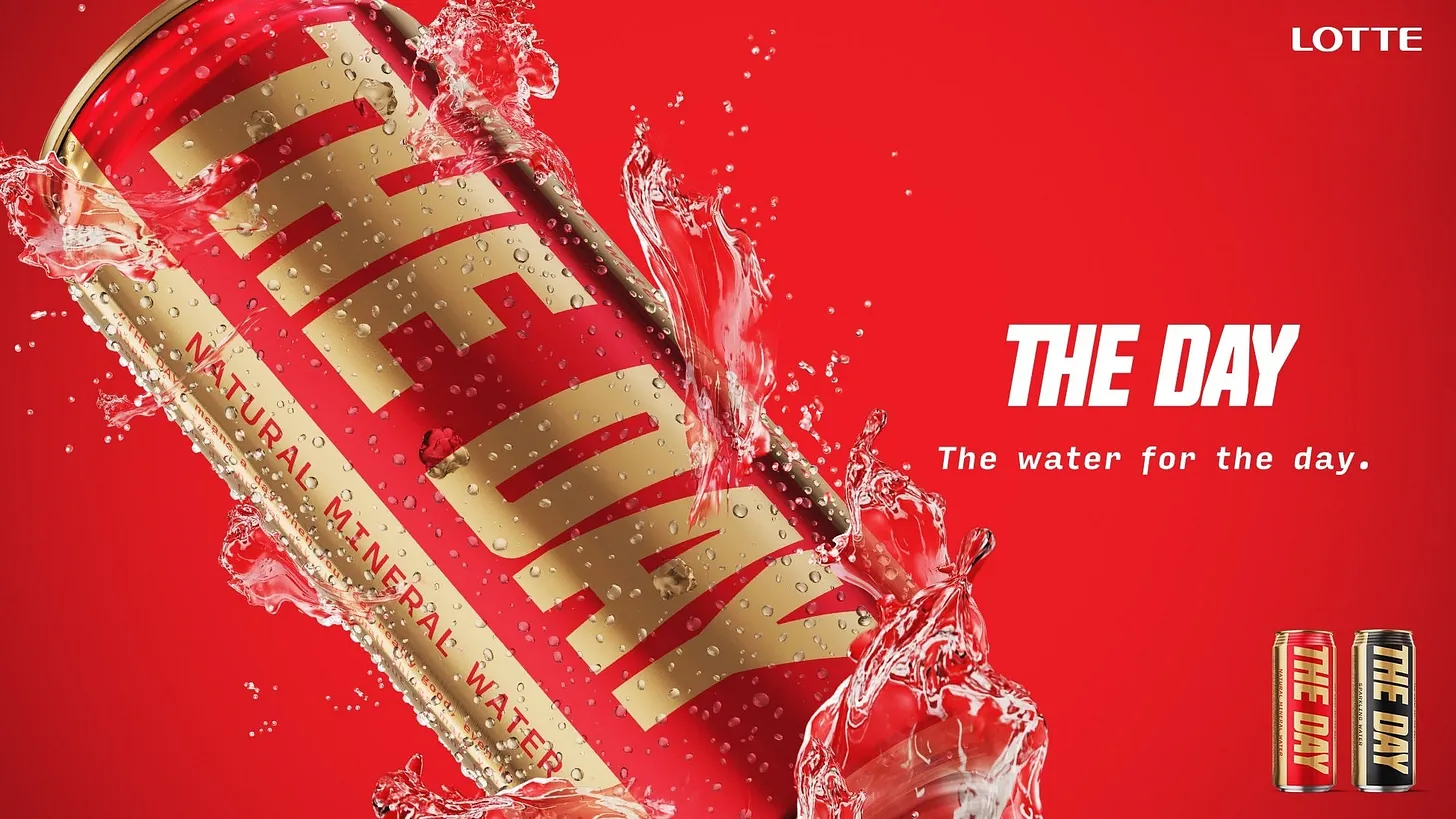
The brand currently has two products: a 480ml natural mineral water in a red-and-gold can, and a 500ml sparkling water in a black-and-gold can. Both use groundwater from Japan’s Southern Alps.
According to Lotte’s original press release, Japan’s mineral-water market was worth approximately ¥450 billion and was still growing.
Most brands in the category, however, focused on functional value. They talked about safety, purity, ingredients or the source of the water. Lotte believed there was an open space for a brand that offered emotional value through its design and story.
In other words, Lotte wanted to move the conversation from functionality to emotion.
Has THE DAY been successful so far?
So far, the early signals are encouraging. Several Don Quijote stores reportedly sold out on launch day. The drink also topped TikTok Shop’s beverage GMV ranking during its first week, and found particular support among consumers in their twenties. Its subsequent expansion into tokyo-area Seven-Eleven stores suggests some retailer confidence.
This does not yet prove that THE DAY is a successful long-term brand. But it does show that the launch created awareness and attracted interest from retailers.
How it gained traction at launch
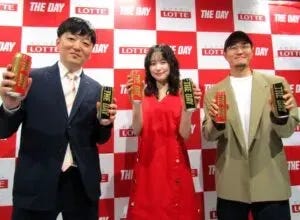
If this product had been launched by a traditional beverage manufacturer such as Suntory, Kirin or Asahi, the approach might have been more predictable.
The company could have secured as much distribution as possible, launched a major television campaign and tried to win space in existing water shelves.
Lotte took a different approach.
Instead of attempting a full mass-market launch from the first day, it started with Don Quijote, Amazon and TikTok Shop. It first targeted consumers who were more likely to appreciate an unusual product and then expanded into convenience stores after receiving a positive initial response.
This was partly a practical decision. THE DAY did not yet have a natural position in existing retail shelves. Before Lotte could increase sales within an established category, it had to persuade retailers that this new type of product deserved shelf space in the first place.
Targeting communities instead of the mass market
Another distinctive feature of the launch was its focus on specific cultural communities.
Lotte appointed rapper and creative director TaiTan as its creative partner. He was involved not only in promotion but also in the brand concept and package design.
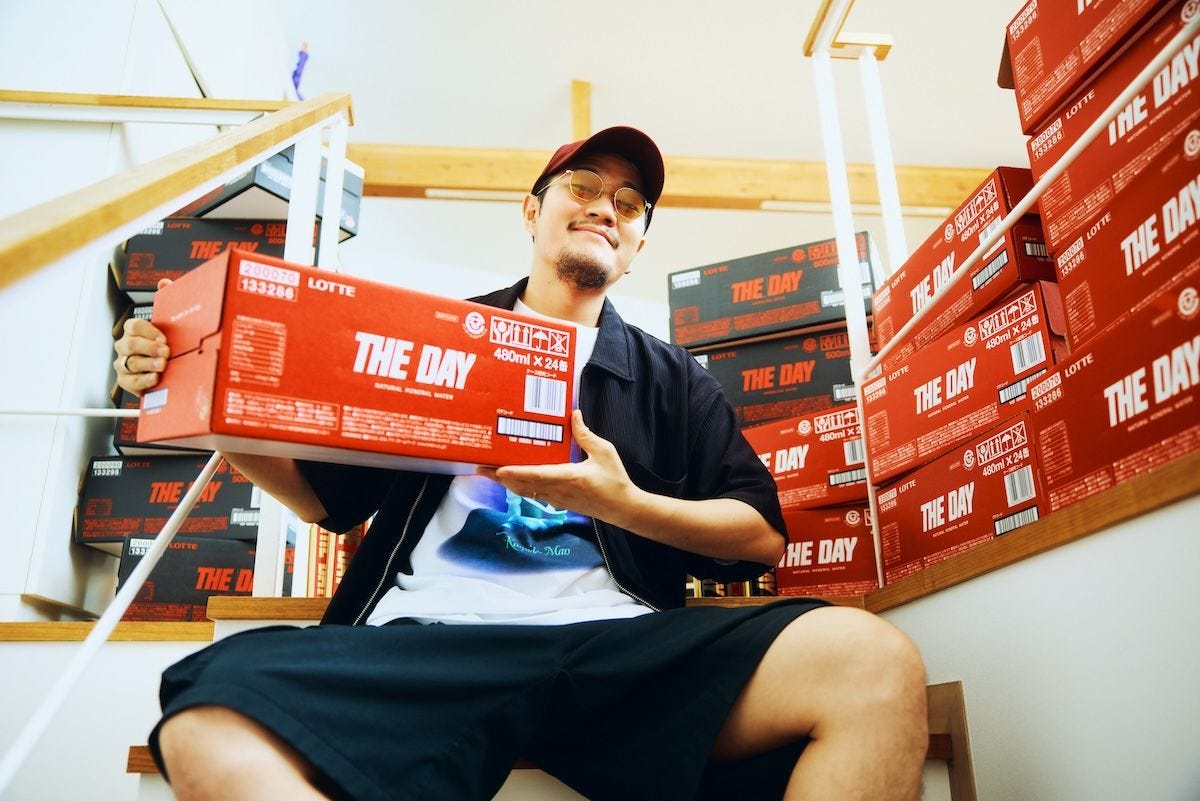
TaiTan already had connections across music, radio and podcasting. During the early launch period, the team used those networks in a guerrilla-style promotional strategy.
There is almost always water inside a radio or podcast studio. The team therefore asked producers and directors to place THE DAY cans inside their booths. This allowed the product to appear naturally around cultural figures without relying entirely on conventional paid advertising.
Lotte also created an original video podcast called Konatsu Kato Drinks Water: THE DAY ROOM. Kato is an actor who has also developed a following in gaming and streaming. Each episode features conversations about what an ideal “THE DAY” would look like for its guest.
The show is distributed through Spotify and YouTube, while shorter clips and behind-the-scenes footage are shared through the brand’s social accounts.
This is quite different from simply hiring a celebrity for a commercial. Lotte is attempting to create entertainment around the brand and allow the content to travel through the communities in which its target audience already participates.
What THE DAY learned from Liquid Death
Of course, Lotte appears to have learned a great deal from Liquid Death.
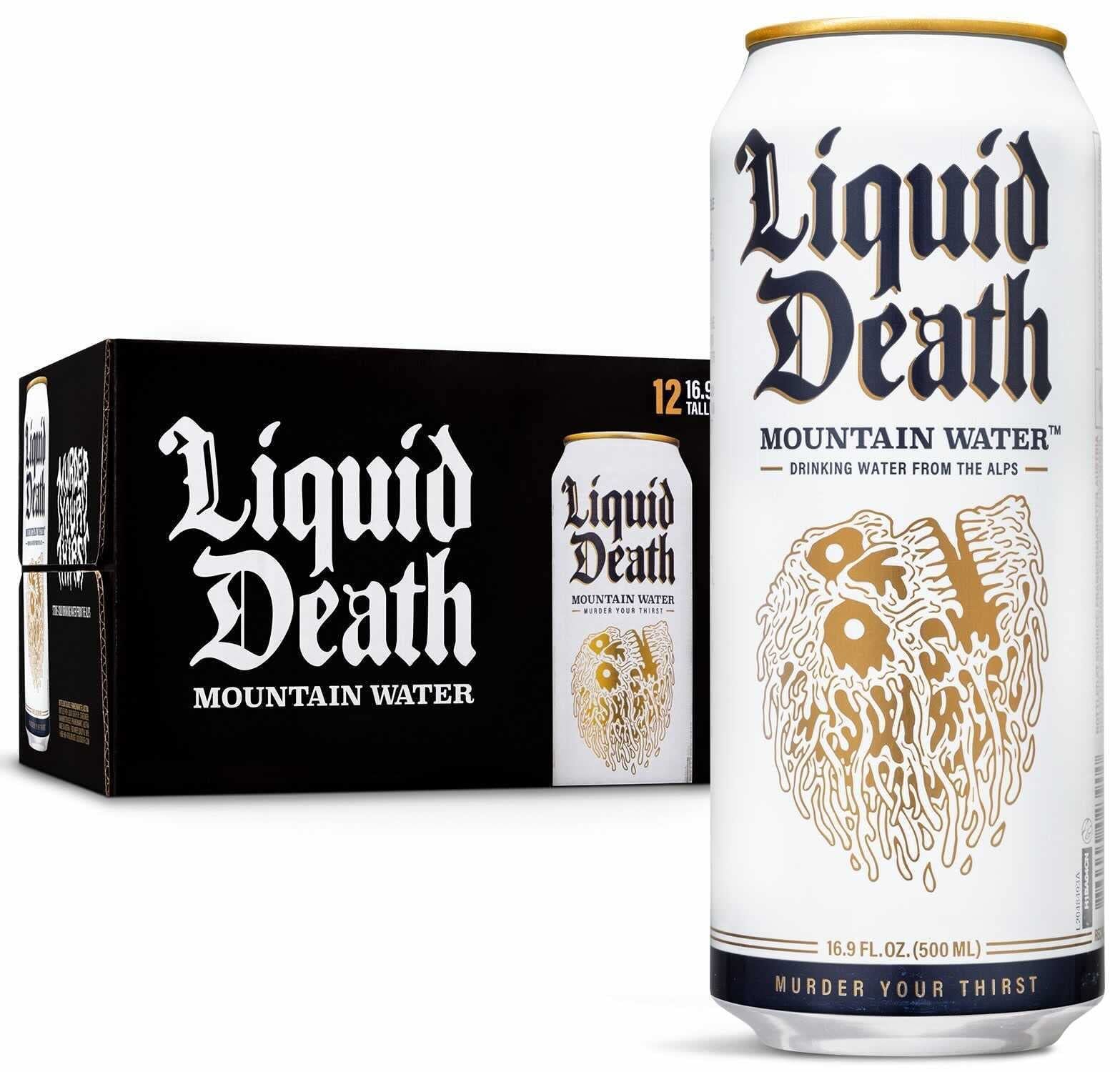
Both brands use aluminum cans and packaging that looks more like an energy drink or alcoholic beverage than water. Both are based on the idea that water does not have to be marketed only through purity and health claims.
During the design process, the THE DAY team reportedly considered a more playful package with stronger character elements, similar to Liquid Death.
In the end, however, they chose a more conventional design that made the brand name easy to read. TaiTan’s concern was that an excessively humorous design might attract attention for a short time but then be consumed as a joke. Once the novelty disappeared, consumers might even feel embarrassed to continue drinking it.
That is an insightful point.
Some products become popular because they are strange. But strangeness alone does not create a lasting brand. A design needs to attract attention without becoming so closely tied to a temporary joke that consumers abandon it when the trend passes.
Even the cartons were designed as part of the brand experience. When stacked, they resemble sneaker boxes and help create a stylish display. This works for online bulk purchases, retail displays and potential placements in restaurants or live music venues.
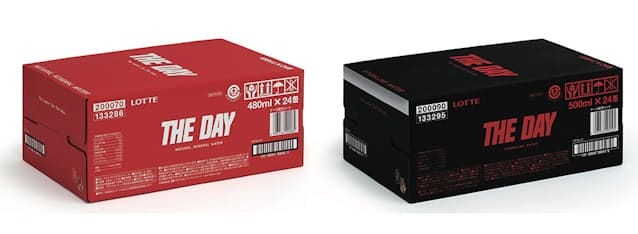
Liquid Death makes water feel rebellious and dangerous. THE DAY tries to make it feel positive and celebratory.
The strategic principle is similar, but the emotional expression is different.
Why is Lotte investing so much?
For a water brand, the level of investment may seem excessive.
THE DAY has its own social channels, video content, creator partnerships and advertising. Lotte is investing in much more than a new package for mineral water.
The reason becomes easier to understand if we consider that Lotte may not see THE DAY as only a water brand.
The name itself can be treated as intellectual property. Anything that helps someone create their own perfect day could potentially sit under the THE DAY brand. The concept could eventually extend into new drinks, events or other lifestyle products.
That also explains why Lotte is building media channels around the brand. The objective is not simply to increase awareness of canned water. It is to increase the reach of the THE DAY concept and gradually create fans of the brand itself.

Is THE DAY really a successful brand?
That is something we cannot confirm yet.
THE DAY has definitely had a strong start. But as with any consumer brand, we need to examine repeat purchases.
I could not find public numbers that confirmed sustained growth, repeat-purchase rates or sales per store. Launch-day sellouts and social-media rankings are positive signs, but they mainly show curiosity and trial.
What could prevent THE DAY from becoming a long-term success?
Weakness 1: The 500ml can is difficult to carry
The most obvious weakness is that THE DAY is available only in a large can.
Once you open it, you have to finish it. A plastic bottle can be closed and carried in a bag, but a can cannot.
How often do people drink 500ml of still water at once?
With beer or a carbonated drink, a can makes sense. The carbonation disappears after opening, so people naturally finish it within a relatively short period. Water is different. Many consumers drink a few sips, close the bottle and continue drinking it later.
A famous blogger already raised the same issue. The can attracts attention, but it is less convenient for commuting or carrying around throughout the day.
Lotte may already be considering a smaller can or a resealable aluminum bottle. Either option would help solve this problem.
Weakness 2: The novelty may fade
The second weakness is that the product’s freshness may disappear over time.
When consumers first see THE DAY, the gold can creates curiosity. They may think, “What is this?” and buy it simply to find out.
But after the first purchase, they know that the surprising can contains ordinary water.
The second purchase therefore requires a stronger reason.
This is a common problem for products that achieve a rocket-like launch through novelty. They can generate awareness and trial, but repeat purchases are much harder. Once the surprise disappears, the product has to compete on habit, price or a clearly defined usage occasion.
THE DAY needs to become more than something people want to try once.
Weakness 3: It does not look like water
In my opinion, the brand’s biggest challenge is that it does not immediately look like water.
This may sound obvious because that is exactly what makes the product interesting. The can looks like beer or an energy drink, but the contents are simply water.
That gap was also one of the reasons Liquid Death became so memorable.
However, not every consumer watches THE DAY’s podcast, follows its social accounts or attends its promotional events. Most people will encounter the product for the first time at a convenience store.
Some of them may not realize that it is water.
A shopper looking for water might ignore THE DAY because it does not appear to belong to the category. They may assume that it is alcohol or an energy drink and move on without examining the label.
The unusual appearance is therefore both the brand’s greatest strength and its greatest barrier.
THE DAY stands out—but it may not always enter the consideration set of people who are actually shopping for water.
Weakness 4: Lotte may struggle to evaluate the investment
This is not a weakness for consumers, but it could become a management problem for Lotte.
THE DAY is the company’s first beverage brand under its new wellness initiative. It is also using community-based marketing that cannot be compared directly with Lotte’s traditional product launches.
How should management decide whether the podcast, YouTube channel and creator partnerships are worth the investment?
Direct sales attribution would probably underestimate their value. At the same time, the argument that these activities are “building the brand for future expansion” could justify continued spending even when the commercial return remains unclear.
Without an appropriate benchmark, it will be difficult to distinguish genuine brand growth from activity that is simply generating attention.
Lotte therefore needs clear success criteria. These should include repeat-purchase rates and sales per store, not only media coverage or views. The company should also examine whether consumers exposed to THE DAY content are more likely to purchase the product again.
What I would do if I were the brand manager
First, I would introduce a resealable aluminum bottle or a smaller can. This would address the practical weakness of the current format.
However, I believe the more fundamental issue is the strength of the brand position.
Liquid Death’s power comes from an extreme contrast. Even the name “Liquid Death” feels completely incompatible with pure water. The contradiction exists before consumers see the package or learn about the company.
THE DAY is a positive and attractive name, but it is also broad. There is no strong contradiction between the phrase “THE DAY” and water. Most of the surprise comes from the can, not from the name itself.
This may be intentional. Lotte probably wanted a universal brand concept that could eventually expand into other categories.
But the first product has to succeed before that expansion becomes possible.
If I were developing the product from the beginning, I might have considered a name such as THE DAY WATER. Now that the brand has already launched, I would not completely rename it. Instead, I would make the word WATER much more prominent on the package and shelf displays.
Consumers should be able to understand the category immediately, even from several meters away.
As Byron Sharp explains in How Brands Grow, infrequent buyers account for a large share of a brand’s customer base. Most people who purchase THE DAY will never watch its podcast or see its social-media campaigns.
For those consumers, the only advertisement may be the product sitting on the shelf.
That is why the package needs to achieve two things at the same time: it must stand out, and it must immediately communicate that the product is water.
Final thoughts
My assumptions may turn out to be wrong. THE DAY could develop into a popular, long-lasting brand. We simply do not have enough evidence yet.
But I am glad that Lotte launched it.
Adventurous products give marketers something to learn from, whether they ultimately succeed or fail. THE DAY shows how an international idea can be adapted to Japanese culture without simply copying its appearance.
What we can say is that it has already had a promising first day. Let’s see what awaits the next day.
We support overseas companies enter and grow in Japan, by becoming your hands-on partner. If you are considering the Japanese market, please contact me any time.
Written by Shin, Founder of Product Strategy