

The secrets of ROCOCO Tokyo’s success — and what luxury brands can learn from it
I still remember the moment clearly.
A long time ago, I had dinner with a woman at a fine restaurant in Tokyo. It was probably my first time at that kind of place, and I was nervous from the start. When I looked at the wine menu, I only saw what looked like bottles, so I asked the waiter if he could bring me the by-the-glass menu.
“Sorry, sir,” he said, looking slightly confused. “These are all by the glass.”
I froze.
The prices were so high that I had assumed they must be bottles. That was probably the first moment I truly realized that there is a completely different “class” or “stage” of dining in Japan from the kind of restaurants I had been used to.
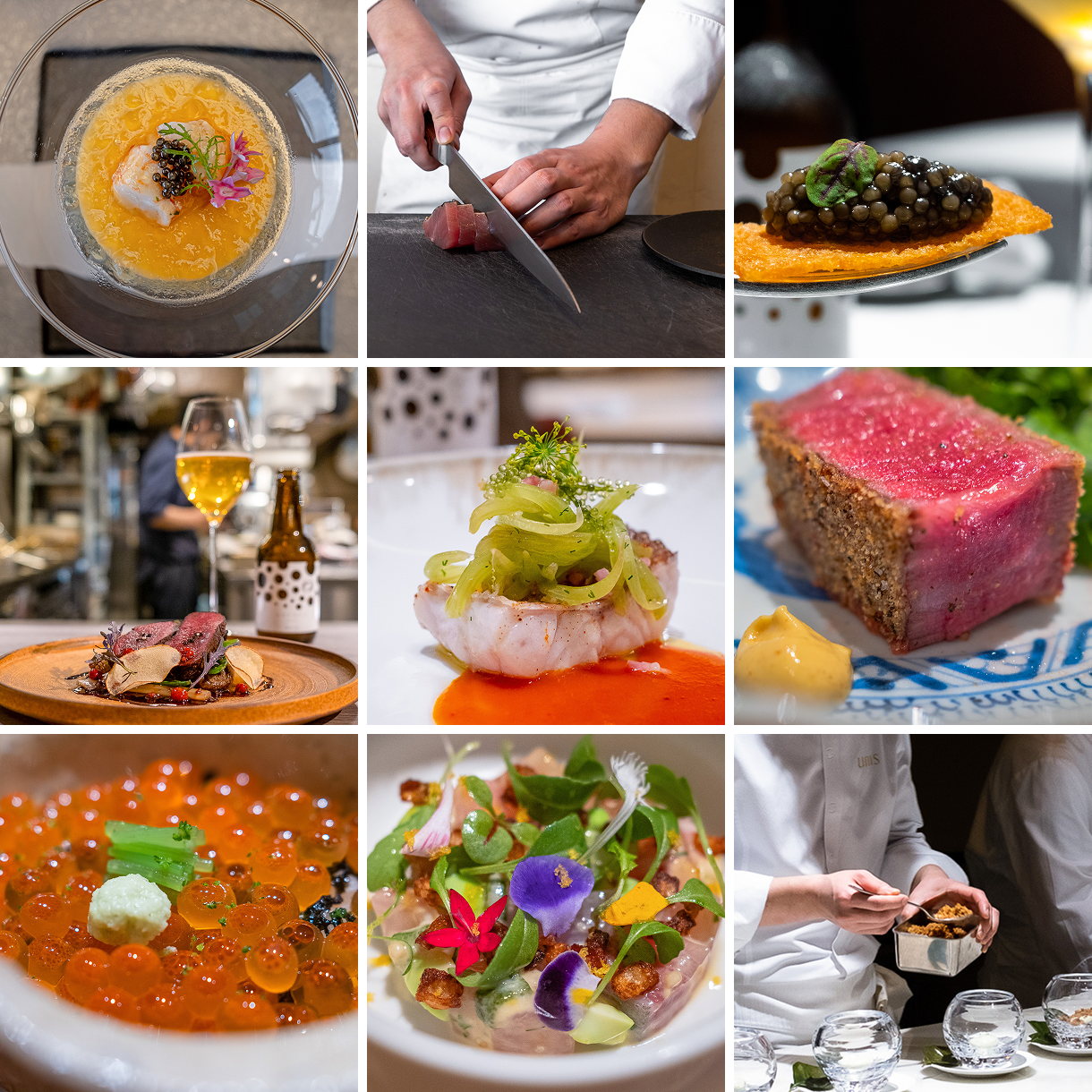
ROCOCO Tokyo is a beer made for that stage.
If you ask Japanese people what comes to mind when they hear the term “premium beer,” they will probably mention The Premium Malt’s by Suntory or Yebisu. Very few — if any — would say ROCOCO Tokyo.
That is not because ROCOCO lacks marketing power compared with the beer giants. It is because of their intended strategy. They are not sold in ordinary retail stores. Not in convenience stores, not in supermarkets, not in liquor shops.
And still, they have been quietly but steadily building a dominant position in the premium beer space in Japan’s finest restaurants.
In fact, according to founder Yohei Wakabayashi’s book, within one year of launch, ROCOCO was already being served in more than 100 Michelin-starred restaurants — which represented roughly half of all Michelin-starred restaurants in Tokyo at the time.
So the question is: how?
How ROCOCO Tokyo started
ROCOCO Tokyo, a premium beer brand created by Mason Rococo, was founded by three people: a Japanese, an American, and a Canadian.
It all started with one question:
Why does ordering beer at a fine dining restaurant sometimes feel a little embarrassing? Why does it almost always start with Champagne?
There are certainly people who would rather start with beer, but the atmosphere and social pressure push them toward Champagne. The founders came to a simple conclusion: there was no premium beer that matched the elegance of Champagne or wine in a fine dining setting.
So they decided to make one themselves.
With that concept, and after more than a year of trial and error, they launched ROCOCO Tokyo in 2018.
Sales steadily increased. The brand later expanded to around 1,000 fine restaurants and hotels across Japan. Today, it is also known as the only beer served at the bar counter of ANA SUITE LOUNGE at Haneda Airport.
How did such a newcomer gain that level of acceptance — to the point that ANA’s flagship lounge adopted it over all the major beer brands in Japan?
There are three major strategies behind it.
1. Their competitor is not beer
This is the most important point.
Although ROCOCO Tokyo is a beer, its competitor is not other beer. Its real competitor is the position Champagne occupies in fine dining restaurants.
Their entire strategy sticks to this one business job: to offer beer as an alternative to Champagne at fine restaurants.
That is why many of their decisions are completely different from those of typical beer brands in Japan.
The price of one bottle is around 1,500–2,000 JPY in restaurants, while a typical can of beer is around 200 JPY. That means it can be around eight times more expensive.
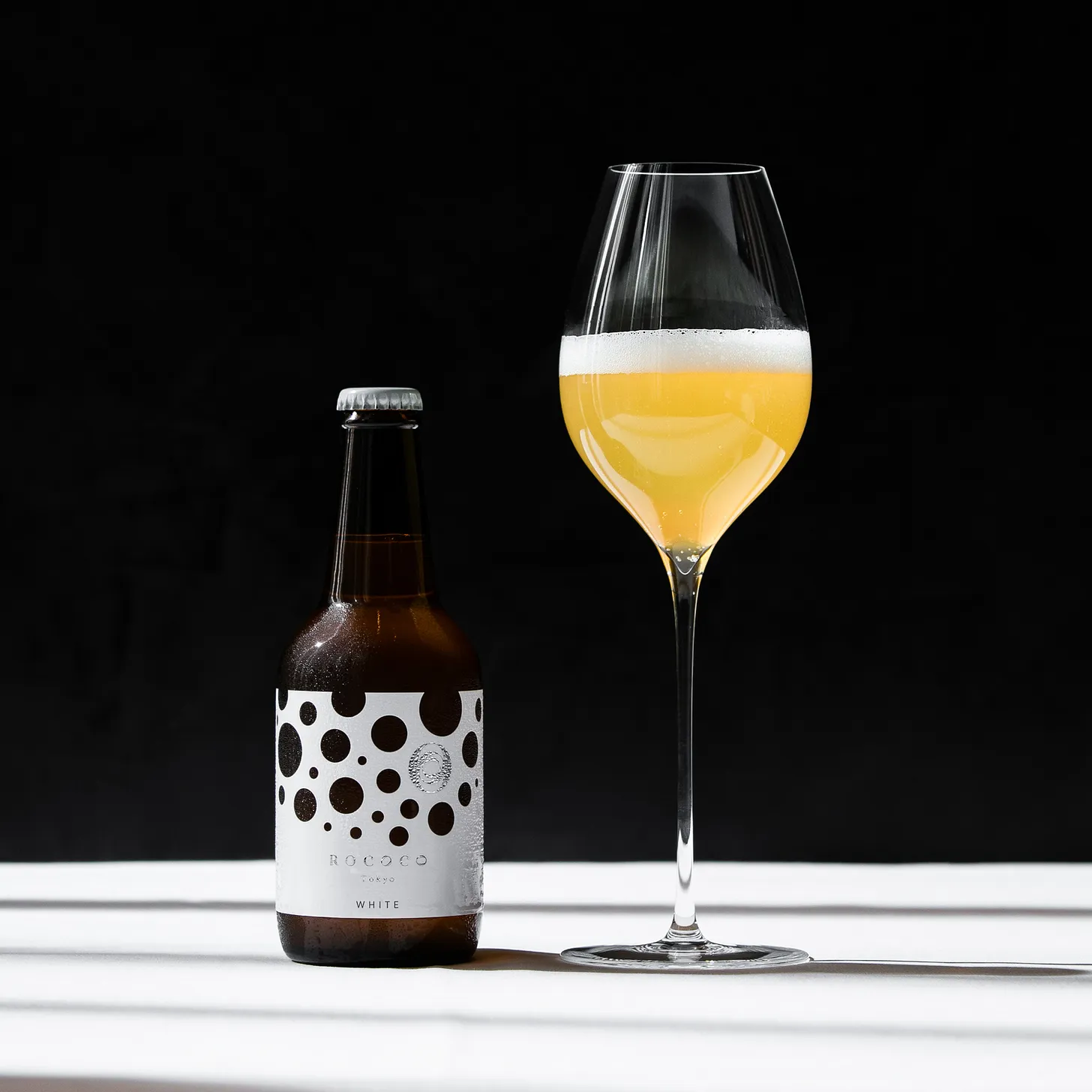
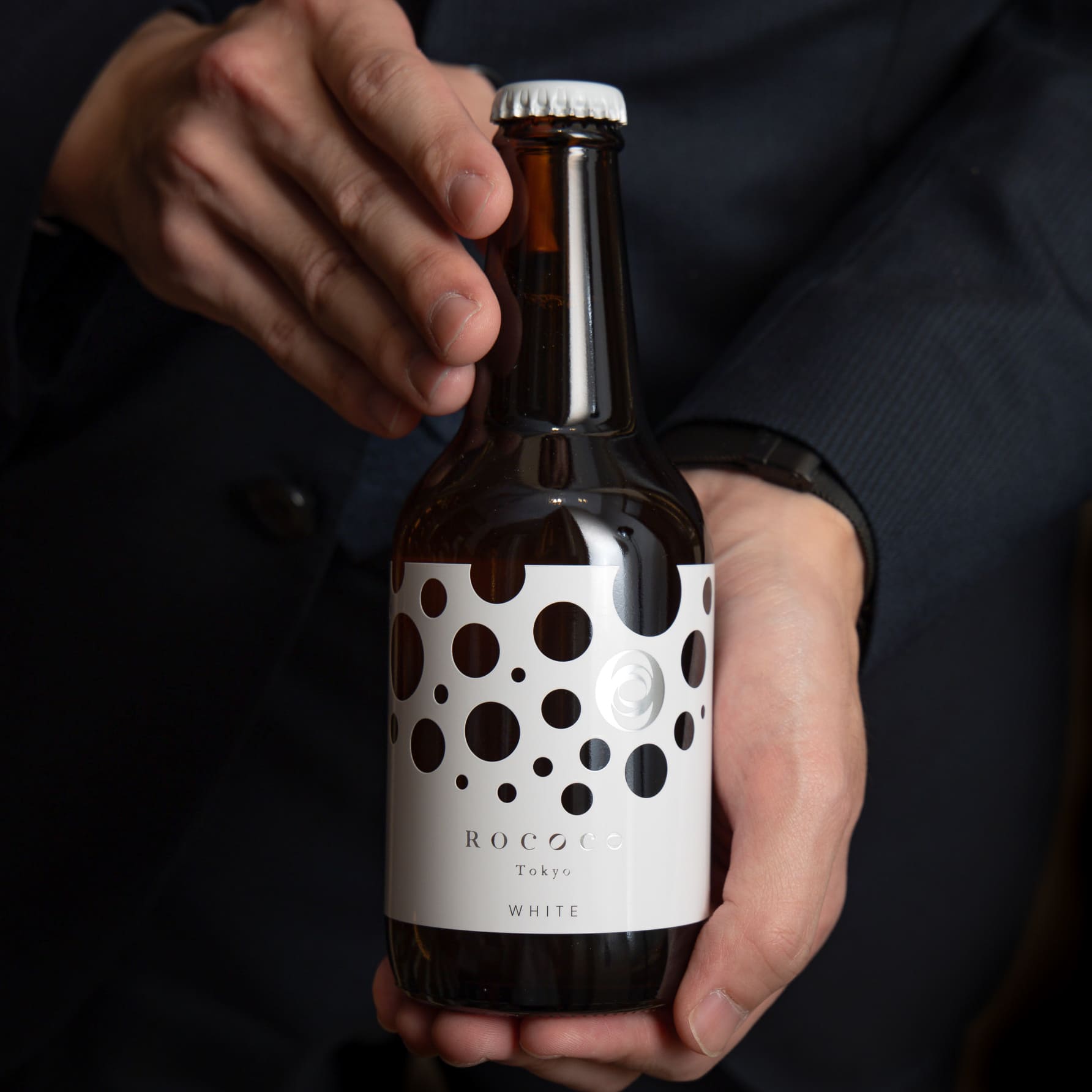
Even the design is intentionally understated. In their view, the main character is the food served at the restaurant. ROCOCO is a supporting actor. It should not draw too much attention to itself.
That is why the bottle design is simple, with only a small brand name on it. If they were trying to win in retail stores, where brands compete through vivid colors and eye-catching packaging, this design would not make sense.
But that is not the game they are playing.
Also, because their main objective is to support food and create a good pairing, ROCOCO is not designed to be enjoyed by itself. They pursued the taste that would best enhance the experience of fine dining.
After multiple tasting interviews, they concluded that the best type of beer for this purpose was white beer.
Wakabayashi writes that a beer bar owner once told them that white beer would never sell, and that IPA was the only option if they wanted to succeed in the beer business.
But Wakabayashi was not swayed by that opinion. Because he had a strong conviction that ROCOCO was playing a different game, on a different field.
2. Start from the top
From the very beginning, they limited their sales efforts to Michelin-starred restaurants.
As Wakabayashi writes:
“From the very beginning, we narrowed ROCOCO Beer’s sales destinations to high-end restaurants centered on Michelin-starred restaurants in Tokyo. That is because it was developed as a drink to solve the problem of the very top of the top restaurants.”
This is an important lesson for any luxury brand entering Japan:
Start from the top.
Where a brand starts helps define where it belongs.
The founders understood this well. If they could crack the very top restaurants first, that would become proof of quality and credibility, making it easier to expand to other restaurants later.
Of course, that was not easy.
According to the founder’s account, they rode bicycles around Tokyo and visited Michelin-starred restaurants without appointments. Sometimes they were rejected. Sometimes they were scolded. But through repeated trial and error, some restaurants gradually started adopting ROCOCO, and the brand slowly gained fans.
To protect the brand image, they still do not sell through ordinary retail channels. They are also still selective about where the beer is served. Even when restaurants ask to carry the product, the company reportedly checks whether the restaurant fits the brand image, sometimes through visits or online meetings.
They prioritize premium brand image over short-term sales, because they understand that in the long run, that image is their most important asset.
Their bicycle sales journey also taught them a lot about restaurants and helped them build relationships with chefs.
Despite all the challenges, Wakabayashi describes it as a very exciting experience and says it was completely worth doing.
That is worth remembering. Even Jeff Bezos once had a period when he wrapped and shipped Amazon orders himself.
3. Research, research, research
No, not the kind of research you outsource to a research agency.
ROCOCO conducted a surprising amount of research with their own hands, and with almost no budget.
According to Wakabayashi’s account, they reached out to friends and acquaintances who regularly went to fine dining restaurants and asked them to answer surveys. They also visited potential restaurant clients and asked them about their perceptions of beer and drinks in fine dining settings.
To figure out what kind of beer would best meet the needs of fine dining lovers, they held multiple home parties and invited around 20 to 30 people who loved fine dining, Champagne, and wine.
At these gatherings, they prepared different types of beer without labels and observed which ones ran out first; it turned out to be white beer.
At the next party, they prepared different types of white beer. This is how they gradually narrowed down the exact type of white beer they wanted to use as their benchmark.
Eventually, they were able to create the one beer they had been aiming for.
Because their purpose was to make the single best beer for fine dining, they chose to sell only one type of beer.
Even after gaining popularity, they did not rush to add more flavors or even a non-alcoholic version. Their belief was simple: the current product was the one and best taste profile for the role they wanted the brand to play.
Important lessons for luxury goods
In short, the biggest lesson from ROCOCO Tokyo is this:
Always remember whose problem you are solving with your product.
ROCOCO is a beer, but the job it is solving is not the same as the job ordinary beer solves.
Its role is to answer the desire of people who want to enjoy beer in a fine dining setting — in a way that matches the atmosphere, the elegance, and the taste of the food.
The role of a product does not have to be defined by its product name.
It is worth taking time to think carefully about whose problem you are really solving.
In many cases, your actual competitors are not what you assume them to be.
Research in Japan is not just about language. It is about understanding how culture shapes behavior, taste, and interpretation. At Product Strategy, we help brands uncover consumer insights and find the right strategic position in Japan.
We are your hands-on partner for Japan market entry and growth.
Written by Shin, Founder of Product Strategy