
Consecutive or Simultaneous Interpreting for a Meeting in Japan?
Choose consecutive interpreting when your meeting can pause for each language. Consider simultaneous interpreting when a presentation needs to continue while the audience listens in another language. For a Japanese–English business meeting, the decision should follow the agenda, who needs to understand each part and how questions will work. Participant numbers alone are not enough to choose a format.
Start with a simple question: can the speaker stop regularly without undermining the purpose of the session? If yes, consecutive interpreting is worth discussing first. If not, ask an interpreting provider to review the programme and technical setup before you book the venue or finalise invitations.
Contents
What changes between consecutive and simultaneous interpreting?
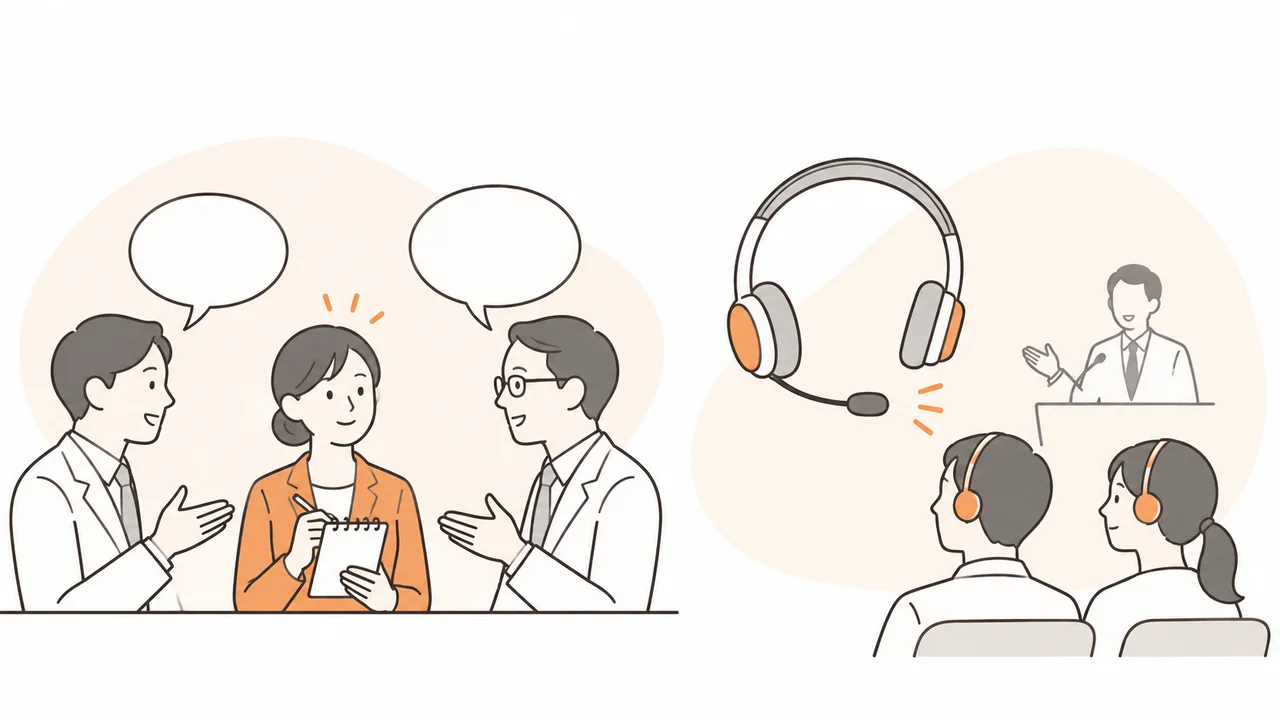
In consecutive interpreting, the speaker pauses and the interpreter delivers that section in the other language. In simultaneous interpreting, the interpretation follows the speaker with a short delay while the speech continues. AIIC Asia-Pacific’s interpreting FAQ explains these formats and the different equipment and team arrangements they can require.
The practical difference is how you design the conversation. With consecutive turns, everyone follows the same sequence: a statement, its interpretation and then a reply. With simultaneous interpreting, listeners need a reliable way to hear their chosen language while the original speaker continues. Neither format removes the need for clear speech or a well-managed discussion.
Compare the format against your agenda
| Meeting need | Format to discuss |
|---|---|
| Small discussion with frequent questions | Consecutive turns, with time for both languages. |
| Presentation that must continue without interpretation pauses | Simultaneous interpreting, including the team and audio setup. |
| Demonstration followed by a seated discussion | Review each part separately; tell the provider where people will move. |
| Several conversations at the same time | Separate coverage or a revised schedule, whichever format you choose. |
Use this table as a starting point for the briefing, rather than a booking rule. A small group can still need simultaneous interpreting for a long presentation. A larger group can use consecutive interpreting if the programme deliberately allows pauses and the room audio works for everyone.
When consecutive interpreting is a sensible starting point
For a distributor meeting, supplier discussion or product review, the pauses can give both teams a clear opportunity to ask questions. Appoint someone to lead the conversation and keep speakers from talking over one another. Ask presenters to speak in manageable sections and finish a thought before pausing; a sequence of isolated words can be difficult for everyone to follow.
Do not fill the entire booking with English-only speaking time. If you have a one-hour meeting, identify the few questions that must be resolved and leave room for interpretation and replies. The exact timing depends on the discussion. Ask the provider to review your draft agenda instead of applying a fixed multiplier to every session.
For a worked-through briefing checklist, see our guide to preparing for a business meeting with a Japanese–English interpreter. It explains how to share the meeting goal and relevant materials without sending an unfiltered folder.
When to discuss simultaneous interpreting
Consider it for a sustained presentation or an event where repeated pauses would disrupt the programme. Explain the speaking length, language direction, Q&A and planned breaks. AIIC notes that simultaneous interpreters usually work in teams so they can alternate. Ask what staffing your actual programme needs rather than assuming that one interpreter can cover an uninterrupted event.
Confirm the complete audio path: how the interpreter hears the speaker and how each participant hears the interpretation. For an onsite event, ask who supplies and tests the equipment. For an online meeting, agree the platform and host responsibilities. Our online meeting interpreting guide covers the practical sound check.
Check questions, movement and overlapping sessions
A presentation with English slides may still need two-way interpreting when Japanese participants ask questions. Tell the provider which languages people will speak, not only the language of the slides. Decide how the chair will recognise questioners and ensure the interpreter can hear them.
If the event moves from a presentation room to a demonstration area, describe that change in the brief. Do not assume the same setup works in both places. Likewise, one interpreter cannot cover two independent conversations at once. Stagger the discussions or ask about additional coverage. This is a scheduling question even when both conversations use consecutive turns.
Compare quotes for the same scope
A useful comparison includes the required team and equipment, not just the advertised hourly rate. Ask what preparation, setup time and technical support are included, and clarify the arrangements for overruns and cancellation before confirming. If you need a recording or written meeting summary, discuss that separately.
Product Strategy’s standard booking options are listed on the service page. Simultaneous or highly specialised assignments may require a separate quote. Explain the proposed format when requesting availability so the quotation reflects the work you need.
Send these details before choosing
- The date, location and start and finish times, with the time zone.
- The agenda, presentation length, breaks and any movement between rooms.
- Who will speak Japanese or English, and who needs interpretation in each direction.
- The number of listeners, how questions will be taken and any parallel sessions.
- Your preferred format, available audio equipment and the person handling technical arrangements.
If you are unsure, send the agenda and mark the decisions still open. Product Strategy arranges Japanese–English interpreting for business meetings in Japan. Share your meeting outline to check availability and discuss the appropriate format.